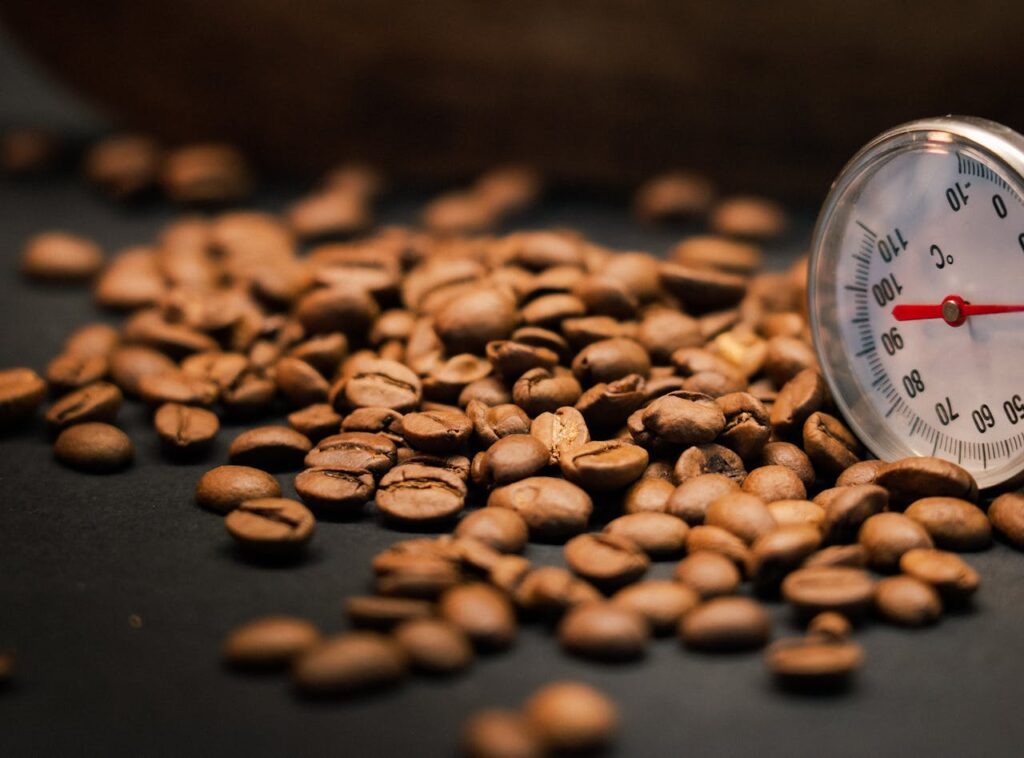
Gauging water temperature feels like a minor detail until you brew micro-lot coffee. Digital thermometers sneak into the ritual, silently competing with built-in kettle controls for precision and trust.
Coffee lovers prize micro-lots for their unique characteristics. Extracting every nuance means controlling water temperature within tight margins, and using the right tool makes all the difference between muddled and lively flavors.
If you want coffee that truly showcases a micro-lot’s profile, explore the practical side of digital thermometers versus built-in controls. This article unpacks both, helping you pick the gear that fits your taste and workflow.
Zeroing in on Accurate Temperature: Consistency You Can Replicate
Nailing consistency when brewing micro-lot coffee saves you from wasting rare beans. Digital thermometers let you check actual water temperature, while kettle controls promise set-it-and-leave-it convenience. Each method shapes your workflow and the subtle outcomes in the cup.
Specialty coffee routines zigzag between trust in tech and a hands-on approach. Use digital thermometers to know exactly what’s happening; with built-in controls, focus on replicable steps for your favorite taste.
Evaluating Real-World Use with Digital Thermometers
Digital thermometers slide easily into coffee routines. Imagine watching the display as water heats, then pausing—”I want 204 F for this Geisha.” Tactile, precise, reliable. This habit allows an exact match to your micro-lot’s ideal temperature profile every time.
A quick probe reading removes doubt for those chasing the best possible cup. Digital thermometers encourage gradual adjustments. You can see whether water continues to climb or plateaus and recalibrate your method instantly based on direct evidence.
When friends crowd the kitchen, you can show the actual water temperature—no guessing, just action. For small-batch experiments, digital thermometers provide a straightforward script to repeat and improve upon with each brew session.
Streamlining the Process with Built-In Kettle Controls
Tap a button, get your temperature—built-in kettle controls promise that simplicity. Scenario: You’re pouring with guests and want zero distractions. Choose your micro-lot, set the kettle, and return only when alerted, instead of hovering nearby.
The takeaway: built-in controls hardwire consistency into your routine. They minimize variables, which matters if your goal is streamlined micro-lot brewing, or if you’re prepping multiple pours for a group—all while the kettle does the work for you.
Some built-in kettle controls allow for preset memory or even Bluetooth syncing. For coffee enthusiasts who love smart gear, this means repeating a favorite recipe is as easy as a single touch—saving practical time without sacrificing control.
| Feature | Digital Thermometer | Built-In Kettle Control | Takeaway |
|---|---|---|---|
| User Input | Manual reading, always engaged | Automatic, set and walk away | Choose if you prefer hands-on or hands-off |
| Precision | Direct display, instant feedback | Relies on kettle’s calibration | Perfect for perfectionists: probes win on accuracy |
| Workflow | Flexible, adaptable to any vessel | Limited to kettle’s program | Thermometers suit tinkerers |
| Speed | Requires an extra step | Fast, integrated | Kettles excel for batch prepping |
| Maintenance | Battery and probe cleaning | Occasional descaling | Thermometers need a quick wipe, kettles need full cleaning |
Pinpointing the Pros and Cons: Making a Choice Feel Natural
Knowing both the strengths and drawbacks helps you feel confident when brewing rare micro-lot coffee. Each tool has an edge in a different scenario. Digital thermometers give granular control, while kettle controls trade in for speed and convenience.
Consider how each approach matches your daily flow. Some micro-lot enthusiasts want to see numbers shift second by second; others want a smooth, distraction-free ritual. There’s an option that mirrors your values and your need for efficiency or exploration.
Where Digital Thermometers Shine
Digital thermometers suit those who personalize every detail. You can swap carafes, pitchers, or kettles, reading water’s actual temperature each time. This directness delivers enthusiastic tinkering and supports evolving preferences for rare beans and varied extraction methods.
- Probe your carafe instantly—no built-in needed—and get a true temperature every single brew.
- Adjust on the fly; if your micro-lot requests 200 F, reading helps dial in your habits.
- Translate the numbers into taste: “204 F brightens this Costa Rican micro-lot.” Real measurable improvement.
- Repeat recipes confidently, since your readings aren’t dependent on any kettle’s calibration curve.
- Easy to clean and store, digital thermometers fit into travel kits for coffee on the go, benefiting any micro-lot enthusiast.
Hands-on adjustments create learning opportunities and turn temperature into a collaboration with your beans, not just a number on a dial.
Where Built-In Kettle Controls Stand Out
Kettles with built-in controls compress decision fatigue. The buttons and presets ensure every micro-lot gets its specific curve, without pausing for secondary readings or worrying about heat loss between boil and pour.
- Preset for micro-lot favorites; punch in 203 F, brew, enjoy without distractions.
- Shave seconds during busy mornings; launch the kettle, grind, and prep simultaneously.
- Spot quick cleaning routines—remove scale monthly to ensure repeatable performance.
- Simplify group sessions with friends; anyone can follow the kettle’s cues for great results.
- Use Bluetooth or memory settings for one-touch brewing, all built in for micro-lot routines.
Turn your attention to flavor, not numbers, letting the equipment automate the hardest decisions.
Choosing by Scenario: What Fits Your Micro-Lot Coffee Ritual?
Bumping up your micro-lot brewing depends on how you like to operate. Digital thermometers and built-in kettle controls both have their best use cases; matching the tool to your ritual brings peace of mind and better flavors.
Picture reading digital thermometers as you switch from V60 to Chemex—flexibility at every stage. Or, imagine your kettle controls handling everything as you multitask before the first sip of a delicate nano-lot brew.
Tinkerers Who Change Brew Gear Frequently
Micro-lot fans with a heap of gear see digital thermometers as essential. Probe the water in any vessel: swap your gooseneck for a glass pitcher, and you’re never left guessing about the temperature difference.
Checking temperature after preheating is as easy as a dip-and-read motion, right before pouring onto grounds. Traders of rare beans love turning each preparation into a small experiment: “Let’s see how this Yirgacheffe reacts at 202.” They log results, shape new recipes, and establish routines based on real numbers.
Making mistakes becomes learning. If the next cup is flat, reading the temperature at each stage makes improvement concrete and trackable—not just a matter of feeling.
Streamlining Setup and Saving Space for Compact Coffee Corners
Built-in kettle controls fit coffee corners where space and simplicity rule. Your daily sequence shortens—start the kettle, grind, and set up your dripper while the water climbs to target.
You don’t need counters cluttered with separate thermometers, as one streamlined appliance carries out every step. The display signals readiness; you’re never left with an underheated or overheating kettle mid-pour.
Preset memory for favorite micro-lot profiles condenses mornings into two touches. Consistency comes from the equipment, freeing brain space for selecting which bean to enjoy or inviting a guest to the workflow.
What to Expect from Accuracy and Longevity: Avoiding Pitfalls
Hitting the right temperature for micro-lots isn’t about luck. It’s about reliability from your gear, whether that’s the probing nature of digital thermometers or precision engineering behind kettle controls. Both have limitations every micro-lot enthusiast needs to know.
Calibrating digital thermometers periodically is required, especially for those seeking 1-degree accuracy. Built-in kettle controls might drift or lose calibration over the years, resulting in off-target readings that can dull your micro-lot’s flavor complexity.
Calibration Steps for Digital Thermometers
Start with ice water—thermometer should read close to 32 F. Adjust using calibration mode if available. For boiling water, expect about 212 F, depending on altitude. Repeat every few months or if readings start to fluctuate widely.
Handle probes gently, especially after boiling. Any bend or crack may cause internal sensor damage, affecting accuracy. Store separately to prevent accidental drops or crushing under other kitchen tools in your micro-lot coffee drawer or container.
Clean probes with a non-abrasive solution to prevent mineral or coffee oil residue buildup. This keeps future readings true, protecting your micro-lot investment with every use.
Built-In Kettle Control Maintenance Routines
Descale the base every 1–2 months, especially if using mineral-rich water. Use a dedicated descaler or a vinegar-water mix. Built-in sensor contacts should be regularly wiped with a damp cloth—never immersing controls.
If you notice temperature creep (kettle appears colder or hotter than expected), compare with a freshly calibrated digital thermometer to verify. Recalibration or professional maintenance may be necessary as the kettle ages with regular micro-lot use.
Replace worn gaskets, seals, or buttons when physical feedback weakens. This retains integrity and keeps your favorite micro-lot routines effortless and reliable for years to come.
Small But Crucial Differences in Flavor for Micro-Lots
Subtle shifts in water temperature unlock or mute critical notes in specialty micro-lot coffee. Digital thermometers empower experimentation, while kettle controls drive consistency. Each inch of difference shows up in your cup, especially when brewing rare beans.
Misreading by even two degrees may flatten fruit notes or disrupt acidity—a lesson familiar to anyone brewing rare micro-lots without digital thermometers. Built-in kettle controls minimize error, letting even new users reliably repeat favorite results.
Example: Fine-Tuning for Washed vs. Natural Micro-Lots
Use digital thermometers to adjust on the fly. For a washed Ethiopian, set your kettle and check with a thermometer—if it’s high, let it cool and watch the digital readout tick down.
Flavor unfolds with every degree. Too cool, and those vibrant florals hide. Digital thermometers allow in-the-moment corrections and make each cup a new canvas for exploration and learning the nuances of each rare bean.
For naturals, warmer water often tames wild fruity notes. Built-in controls preset to 203 F can highlight dark cherry and jammy flavors, especially if you commit to repeating a precise temperature every time.
Analogies for Finding Your Preferred Workflow
Think of digital thermometers as paintbrushes and built-in controls as paint-by-numbers sets. The brush gives you infinite shading, while the numbers simplify building your favorite scene over and over again—either route celebrates micro-lot coffee’s individuality.
Actions: With direct readings (thermometer), you shape the story of your micro-lot’s flavor with each new bean. With kettle controls, you build a recognizable method to enjoy that flavor again without distraction.
Either choice puts you in control. Find the one that fits your pace: experiment by hand when inspired or go automated when you need reliability.
Summary and Final Reflections for Your Micro-Lot Toolbox
Both digital thermometers and built-in kettle controls unlock the full potential of specialty coffee micro-lots. Every precise measurement or saved setting preserves rare flavors and gives you repeatable results with these treasured beans.
Consider your brewing habits—do you enjoy tweaking each cup or need hands-off reliability? The tools each match a type of enthusiast and a set of micro-lot routines, delivering the cup you want by your preferred path.
Let accuracy and consistency support your enjoyment of micro-lot coffee. Whichever tool you choose, let it inspire curiosity so that every brew becomes both effortless and a little bit magical.
Frequently Asked Questions
Are digital thermometers necessary for brewing every micro-lot coffee?
While digital thermometers provide maximum control, they aren’t mandatory for good results. They’re valuable for those experimenting with rare beans, precise extraction, or verifying built-in kettle accuracy.
Do built-in kettle controls lose calibration over time?
Yes, especially with frequent use and mineral buildup. Check accuracy every few months with a digital thermometer. Recalibration or routine descaling maintains reliable performance for your micro-lot routines.
What’s the best water temperature for most micro-lot coffees?
Many micro-lots shine between 198 and 205 F. Always start with your roaster’s recommendation, then tweak by taste. Digital thermometers allow more unique fine-tuning for each batch or bean.
Can I travel with a digital thermometer for on-the-go micro-lot brewing?
Yes, digital thermometers are compact and ideal in travel kits. They’re perfect for prepping micro-lots in hotel rooms or while camping, offering accurate readings regardless of unfamiliar kettles or brewing gear.
Does temperature precision really affect micro-lot flavor?
Absolutely. Micro-lots have nuanced profiles that react to small temperature changes. Digital thermometers let you chase the exact degree for maximum flavor, while kettle controls ensure consistency for your favorite style.