Few things rival the satisfaction of savoring a cup from your own specialty micro-lot selection, right at your kitchen’s home coffee bar. With the right setup, every morning can start with an inspiring ritual and exceptional flavor that feels handpicked.
Creating a personalized home coffee bar matters because specialty micro-lots deserve care and attention, showcasing unique profiles you simply won’t find in mass-produced coffees. Design impacts not just taste, but your entire daily experience.
In this article, you’ll discover exactly how to build an inspiring home coffee bar for micro-lot beans. From essential equipment to storage solutions and tasting rituals, each section offers steps you can follow immediately for a rich at-home coffee journey.
Assessing Your Space for a Tailored Coffee Bar Experience
Planning your home coffee bar setup begins with analyzing where it will live and how you move in that space. A tailored coffee zone can transform even the smallest counter into a specialty coffee haven.
Clear a dedicated surface—such as a kitchen cart or unused buffet—to minimize clutter and spotlight your micro-lot collection. Grouping all tools in one area builds a ritual-friendly flow and keeps the act of brewing inviting and accessible.
Organizing by Use: Practical Placement Strategy
Put your grinder and scale closest to the edge, ready for action. Store your go-to micro-lot beans within reach, visually inviting you every time you pass by. Tuck rarely used gadgets toward the back.
Set a routine: After grinding, move seamlessly to the pour-over or espresso spot. This motion mimics professional setups and encourages consistent technique with every brew.
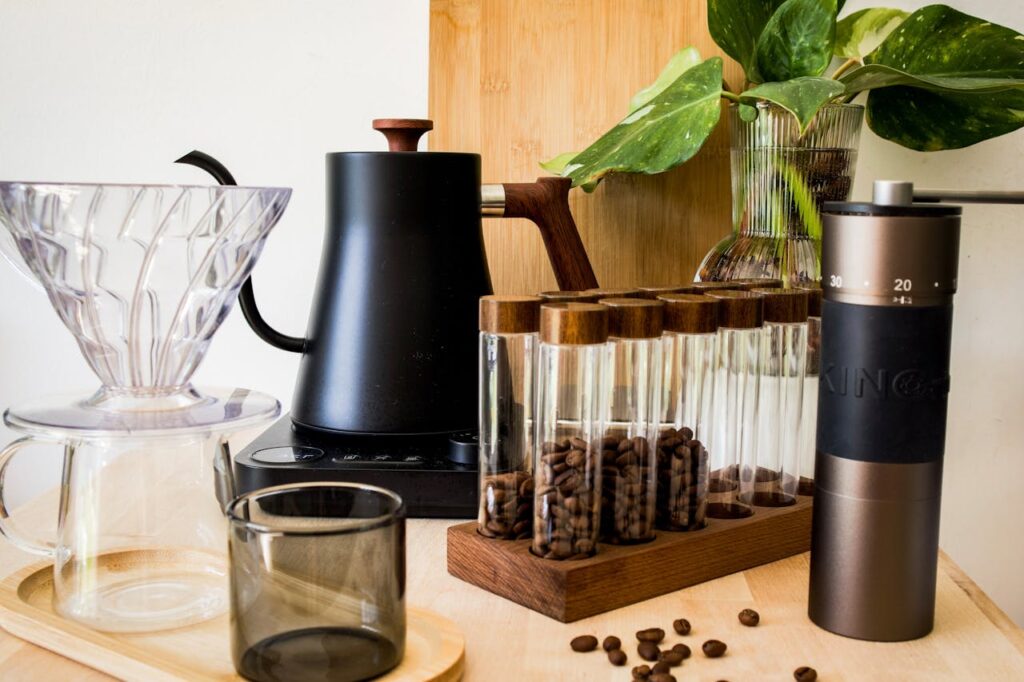
Visual cues, like glass canisters or labeled drawers, help keep each step organized. They also spotlight the best of your home coffee bar while making it easy for guests to navigate.
Scenario: Small Apartment Adaptation
Imagine claiming a slim cart by your dining table: Your scale and grinder fit on top, mugs hang beneath, and micro-lots fill sealed jars. “That’s my coffee zone” describes the pride in this small, efficient nook.
If space feels tight, a fold-out shelf or floating wall rack can work wonders. Slide out each morning, then stow away for lunch prep. Subtle cues keep the focus on enjoyment, not clutter.
The goal: Design a dedicated corner where every tool, bean, and process is visible, accessible, and a joy to use. Even in limited quarters, your home coffee bar can boast big personality.
| Space Type | Key Items to Include | Storage Solution | Recommended Step |
|---|---|---|---|
| Large Kitchen | Espresso machine, pour-over kit, grinder | Freestanding cabinet | Group all brewing tools on one side for workflow |
| Small Apartment | Manual brewer, scale, micro-lot jars | Rolling utility cart | Install a wall-mounted mug rack above cart |
| Studio Loft | AeroPress, mini-kettle, cup set | Floating shelf | Keep tools on display for quick access |
| Shared Home | Multiple brewers, variety of beans | Labeled storage bins | Assign each housemate a bean jar for rotation |
| Office Kitchenette | Compact grinder, micro-lot sampler packs | Stackable drawers | Label drawers by origin for discovery |
Picking the Right Equipment for Your Specialty Micro-Lot Beans
Choosing equipment for your home coffee bar impacts every extraction, ensuring you showcase the true character of each micro-lot coffee. Select foundational pieces that fit your chosen brew methods.
Pare down to essentials: A reliable grinder, accurate scale, and quality kettle set the standard. For micro-lots, a manual brew device amplifies subtle flavors, while automatic machines offer consistent results and convenience.
Selecting a Quality Grinder
Burr grinders yield even grounds, essential for highlighting a micro-lot’s best qualities. Choose adjustable settings—this lets you dial in for both pour-over and espresso. Clean weekly to maintain clarity in every cup.
- Adjust settings for grind size suitable for each micro-lot—medium-coarse for pour-overs, fine for espresso shots. This maximizes extraction and flavor complexity.
- Invest in a grinder with easy maintenance features—removable burrs save hassle. Keeping it clean prevents stale flavors from contaminating your daily coffee bar ritual.
- Keep the grinder within arm’s reach, directly on your home coffee bar surface. This integrates the grinding process into your workflow without crossing the kitchen repeatedly.
- If you share your setup, label the grinder settings or tape a small reference guide nearby. This ensures everyone brews each micro-lot coffee with care and confidence.
- Store fresh beans in airtight containers beside your grinder. Roll the bag closed after every use; preventing oxidation is vital for micro-lot freshness and peak complexity.
Choose grinders with conical burrs for quiet, efficient grinding. Flat burr options excel for espresso lovers who want uniform results in every shot. Both have a role in exploring specialty beans.
Choosing the Brewing Device for Your Ritual
The brewing device becomes the centerpiece of your home coffee bar. A Chemex or Hario V60 draws out nuanced floral notes; an espresso machine highlights syrupy body and intensity.
- Select equipment that aligns with your preferred cup—pour-over for clarity, French press for richness, or AeroPress for adventure. Each device uncovers unique layers in micro-lot flavors.
- Try a side-by-side test: Brew the same micro-lot coffee in both a pour-over and a press. Note how body, sweetness, and finish shift with each method. Record your observations for future reference.
- Rotate devices seasonally—iced brewers in summer, espresso in cooler months. This keeps your routine engaging and encourages broader exploration of specialty micro-lots.
- Pair your brewing device with a matching server or insulated carafe. Serve guests directly from the brewer, emphasizing the home coffee bar’s sense of occasion.
- Display your favorite device on the front row. Let visually pleasing equipment, such as a glass Chemex or shiny espresso machine, inspire daily usage and conversation.
Keep instructions or quick guides near each device. “Press slowly for full extraction,” or “use 1:16 coffee to water ratio”—such cheatsheets boost confidence in each step of your home coffee bar routine.
Sourcing and Storing Micro-Lot Coffee Beans
Careful storage and strategic sourcing amplify the experience of your home coffee bar. Each micro-lot features a distinct profile, and how you buy or preserve beans directly shapes what you taste in the cup.
Bean Selection for Flavor Exploration
Opt for micro-lots from trusted roasters that supply details about farm, processing, and roast profiles. Buy in small quantities—just a week or two’s supply guarantees fresh, lively flavors and lets you experiment often.
Compare beans side by side. Notice citrus aromas, berry bursts, or chocolatey depth. Write a tasting note for each, such as “tangerine finish, silky body”—these notes help refine future home coffee bar purchases.
Store beans in opaque, airtight containers, away from sunlight or humidity. Resealable tins on your home coffee bar keep micro-lots organized while protecting against staleness. Rotation encourages continual exploration.
Tracking Freshness and Micro-Lot Origins
Label storage jars with roast dates and origin. Organize by usage—one jar for morning brews, one for guests, one for experimental recipes. Let conversation lead your coffee bar discovery.
Commit to a restocking schedule, such as every second weekend. This steady rhythm ensures the home coffee bar always has a new micro-lot to discover. Reward yourself with a new flavor note each time.
Share your favorite origin with visitors. As they comment—”that has a blueberry aroma!”—refill from your neatly arranged canisters. The home coffee bar becomes a discovery hub for micro-lots and conversation alike.
Refining Your Daily Brewing Technique for Consistent Results
Consistent brewing transforms each cup at your home coffee bar from guesswork into ritual. Use a scale to weigh coffee and water, follow a repeatable bloom and pour sequence, and track variables for steady excellence.
Start each session with freshly ground micro-lot beans. Measure precisely, aiming for 1:16 coffee-to-water ratio. Let water rest off boil for 30 seconds, then use circular pours to evenly saturate the bed.
Developing a Personalized Tasting Protocol
Create a notebook for tasting notes. List micro-lot name, brew method, time, grind size, and initial aroma. Use direct observations: “apricot at the start, cocoa in finish.” This sharpens your palate and guides future selections.
Sample with undistracted focus—no phone, no noise. Take a sip, coat the tongue, and breathe out through your nose to catch fleeting aromas. Record immediate impressions for full sensory recall in your home coffee bar log.
Repeat the tasting over several days. As each micro-lot ages, compare changes. This adds depth to the ritual and highlights how small tweaks or storage can impact your daily home coffee bar experience.
Quick Checklist: Troubleshooting Common Extraction Issues
– If coffee tastes sour, grind finer or use slightly warmer water.
– For bitter cups, grind coarser or decrease extraction time by 10-20 seconds.
– Track adjustments in a dedicated logbook, writing down exact changes and results. This tight feedback loop makes improvements visible and actionable for every home coffee bar experiment.
Designing for Comfort, Community, and Creativity
A memorable home coffee bar blends visual appeal, tactile comfort, and welcoming touches. Personalize the space with warm textures, favorite mugs, or a display of micro-lot packaging that sparks conversation and delight.
Arrange soft lighting, a small chair, or an art print nearby. Invite household members or guests to help in the brewing—”care to weigh today’s micro-lot?”—fostering community and curiosity around every cup.
Adding Creative Elements for Enhanced Ritual
Start with a rotating gallery wall of coffee-themed postcards or art made from used packaging. Swap pieces each season for fresh inspiration. Place a small vase with seasonal flowers, echoing the region of your micro-lot selection.
Use a chalkboard or mini-whiteboard for daily coffee notes. “Today: Ethiopia natural, berry aroma, silky body” grabs attention and nudges everyone to notice the details. Mark holidays or special occasions with themed displays.
Introduce background music—instrumental jazz in the morning, acoustic in the afternoon—to set a comforting mood. The home coffee bar becomes more than functional; it becomes a scene for creativity and shared enjoyment.
Frequently Asked Questions
What defines a micro-lot coffee, and why does it matter for home setups?
Micro-lot coffee is sourced from small, distinct plots often managed manually. For a home coffee bar, micro-lots offer unique, traceable flavors that transform daily brewing into a series of true discoveries.
How should I store micro-lot coffee if I don’t finish it within two weeks?
Use airtight, opaque canisters on your home coffee bar. Store in a cool, dry space away from direct sun. Portion larger bags into smaller ones for staggered freshness and enjoy peak flavors over time.
Can I use automatic machines for micro-lot coffee, or is manual preferred?
Both work with a home coffee bar. Manual methods—like pour-over or AeroPress—let you control each variable. Automatic machines provide consistency and speed, but grind and water temperature still matter.
What’s the best grind size for specialty micro-lots?
Match grind to your brew method: medium-coarse for pour-over, fine for espresso. Experiment with your grinder’s settings and adjust by taste. Always label and save your favorite parameters in a logbook near your home coffee bar.
How do I help guests appreciate micro-lot coffee without overwhelming them?
Serve one featured micro-lot per visit and share a brief flavor note like “peach aroma, floral finish.” Invite guests to describe what they taste. The home coffee bar creates easy, unhurried opportunities for discovery and discussion.